


A beach chair has one of the harder jobs in outdoor furniture. It gets carried across soft sand, planted at the water's edge, sat in for hours, rinsed off, folded flat, and tossed in a trunk — sometimes all in one day. Plenty of folding beach chairs manage one season of that before a strap gives out or a joint seizes up. The good news is that picking one built to last isn't complicated. It comes down to four things: seat height, back height, frame, and fabric. Here's how to think through each one before you buy.
Start With Seat Height: Beach Chairs Are Supposed to Sit Low
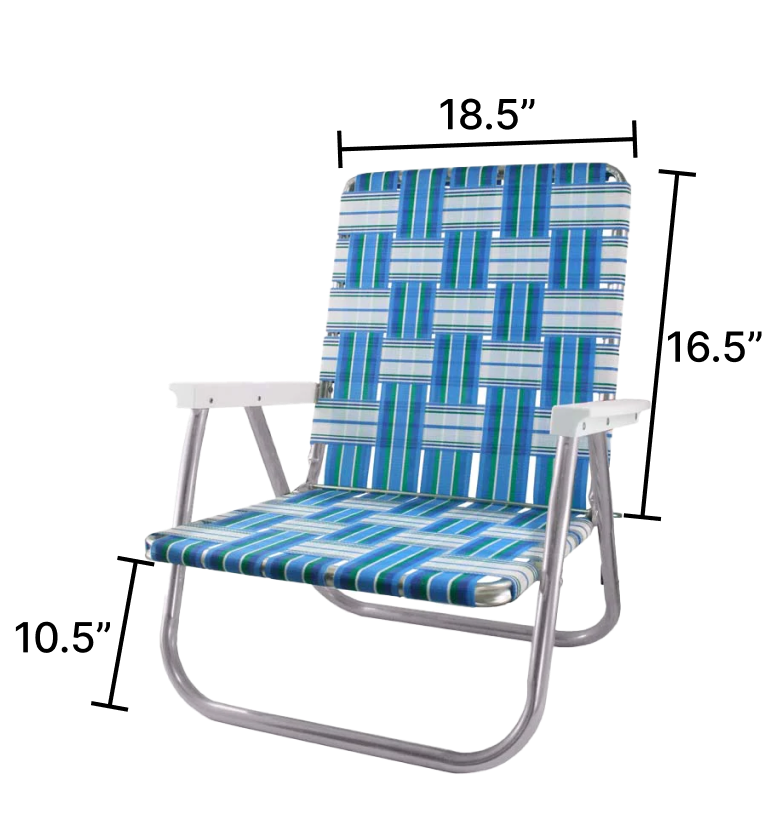
The biggest difference between an everyday lawn chair and a true beach chair is how far off the ground you sit. A beach chair sits low on purpose — ours put the seat about 10 inches off the sand. That low stance does three things. It keeps your center of gravity down, so the chair stays planted when the legs settle into soft sand. It lets you stretch your legs straight out instead of dangling them. And it tucks you under the worst of the wind, which anyone who has spent a breezy afternoon at the shore will appreciate.
The trade-off is honest: a low chair takes a little more effort to stand up from. If you have knees that complain, or you'll mostly use the chair on grass and pavement, a standard-height folding chair from our aluminum webbed lawn chair collection may serve you better. For a day in the sand, though, low is the way to go.
High Back Beach Chair or Low Back?
Folding beach chairs come in two silhouettes, and the right one depends on how you actually spend your beach time.
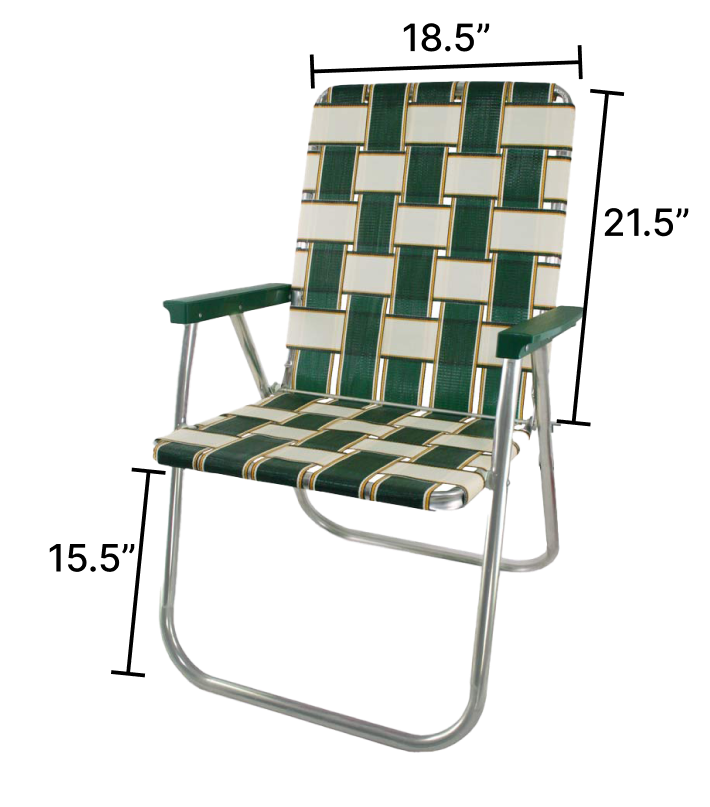
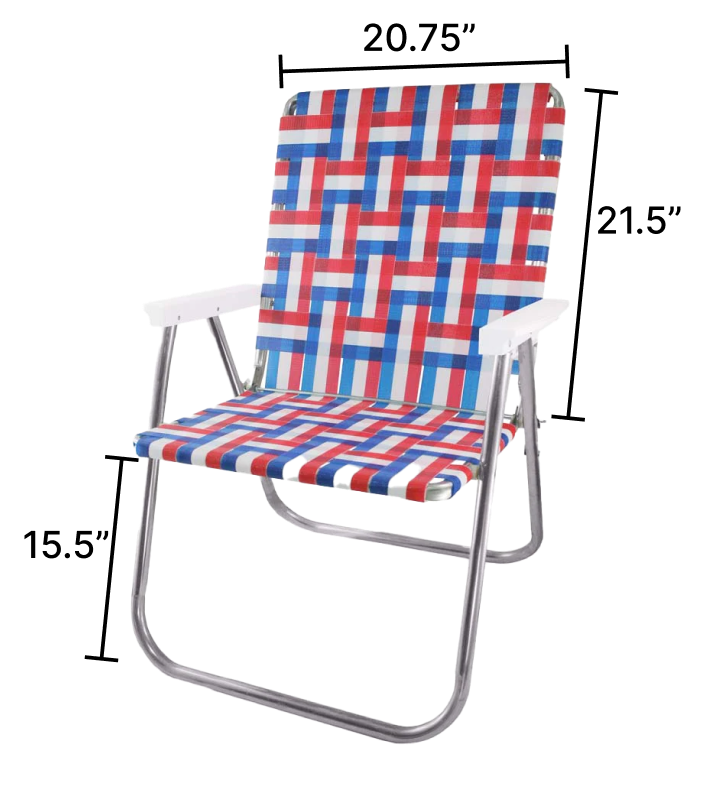
- A high back beach chair supports your shoulders and head, which is what you want if you read, doze, or simply sit for long stretches. The backs on our high back beach chairs stand 21.5 inches tall — enough to lean your head back and watch the waves without holding your neck up.
- A low back chair keeps a smaller profile and packs a bit smaller. Some people prefer sitting more upright — it's a fine choice for keeping an eye on kids in the water, where lounging isn't really on the agenda anyway.
If you're not sure, go high back. It does everything the low back does, and it's the one you'll be glad to have at hour three. You can see every color and stripe we make in our beach chair collection.
The Frame: Why Aluminum Has Earned Its Place in the Sand
Salt air is brutal on outdoor furniture. Steel frames rust — first at the joints, then everywhere — and once a folding mechanism corrodes, the chair's days are numbered. Aluminum doesn't rust. It forms a thin oxide layer and then stops, which is why you still see aluminum folding chairs from decades ago doing beach duty today.
Aluminum is also light, and at the beach that matters more than almost anywhere else, because you're carrying everything farther than you think. Look for a frame with tight rivets and a smooth folding action, give it a quick freshwater rinse after saltwater trips, let it dry open, and it will outlast the car you drive it there in.
Webbing or Sling Fabric?
The seat is where most beach chairs actually fail, so it's worth a moment. Most chairs support you one of two ways: a single sling of fabric, or woven straps of webbing.
Sling seats feel fine at first, but they trap sand, dry slowly, and when the fabric tears or the stitching lets go, the chair is done — there's no fixing it. Webbed seats breathe, drain, and dry fast; sand brushes through instead of pooling in your seat. Our chairs are woven with UV-resistant polypropylene webbing, because sunlight — not sitting — is what wears webbing out fastest.
Webbing has one more advantage that's easy to undervalue on the day you buy: every strap is individually replaceable. Years from now, if a strap finally fades or frays, you can swap it — or re-weave the whole chair in new colors — with a roll from our replacement webbing collection. A sling chair with a torn seat goes to the curb. A webbed chair gets a second life.
Weight and the Walk From the Car
Here's a simple test: can you carry the chair, the cooler, the umbrella, and a kid's sand bucket in one trip? Our beach chairs weigh 3.5 pounds each and fold flat to about 25 inches, so a pair carries easily in one hand and slides flat into a trunk or against the wall of a garage. They also come fully assembled — no small thing when you buy a chair the week of a beach trip. Whatever chair you choose, check the weight before you buy; a chair that's a chore to carry is a chair that stays home. And check the capacity rating while you're at it — ours are rated for 225 pounds.
Beach Chairs That Earn Their Keep All Year
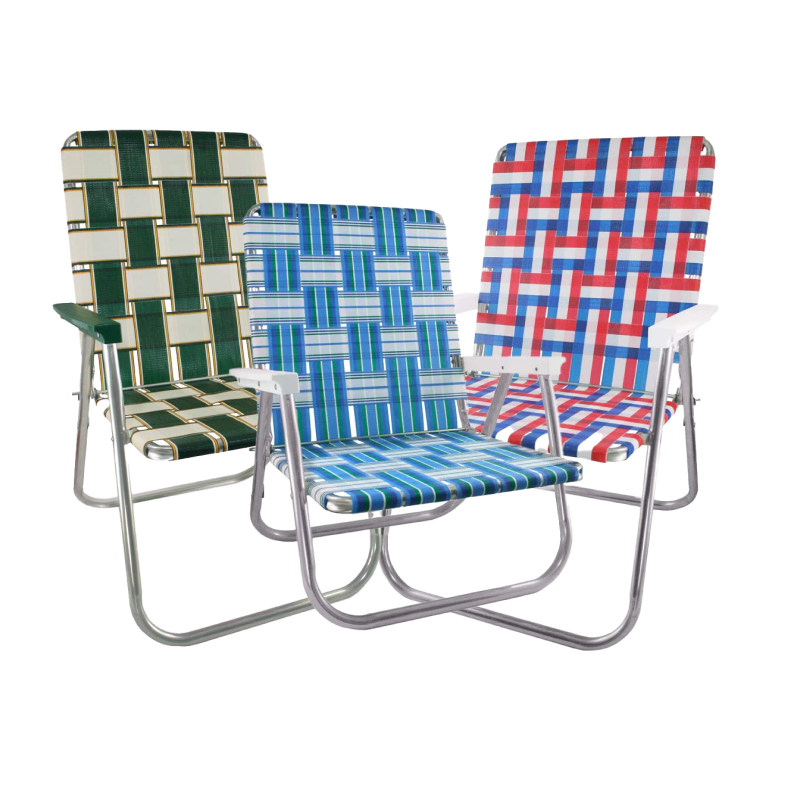
A good folding beach chair shouldn't hibernate ten months a year. The same low, webbed aluminum chair works around a fire pit, at a lawn concert, at fireworks, or anywhere the seating is ground-level and the evening runs long. That's a case for picking a pattern you'll be happy to look at beyond the beach — the blue and white Sea Island Beach Chair if you lean coastal, the green and tan Charleston Beach Chair if you like a classic, or the red, white, and blue Patriot Beach Chair if your beach season peaks on the Fourth of July.
A Quick Checklist Before You Buy
- Seat height: around 10 inches for sand; standard height for grass and patios.
- Back height: 20-plus inches if you plan to lean back and relax.
- Frame: aluminum, with tight rivets and a smooth fold.
- Seat: woven webbing that drains, dries, and can be replaced strap by strap.
- Weight: light enough to carry with a full load — under 5 pounds is the sweet spot.
- Care: rinse after salt, dry open, store out of direct sun.
Choose on those six points and you won't be buying another beach chair next summer — or the summer after that. When you're ready, our made-in-the-USA high back beach chairs check every box on the list.