

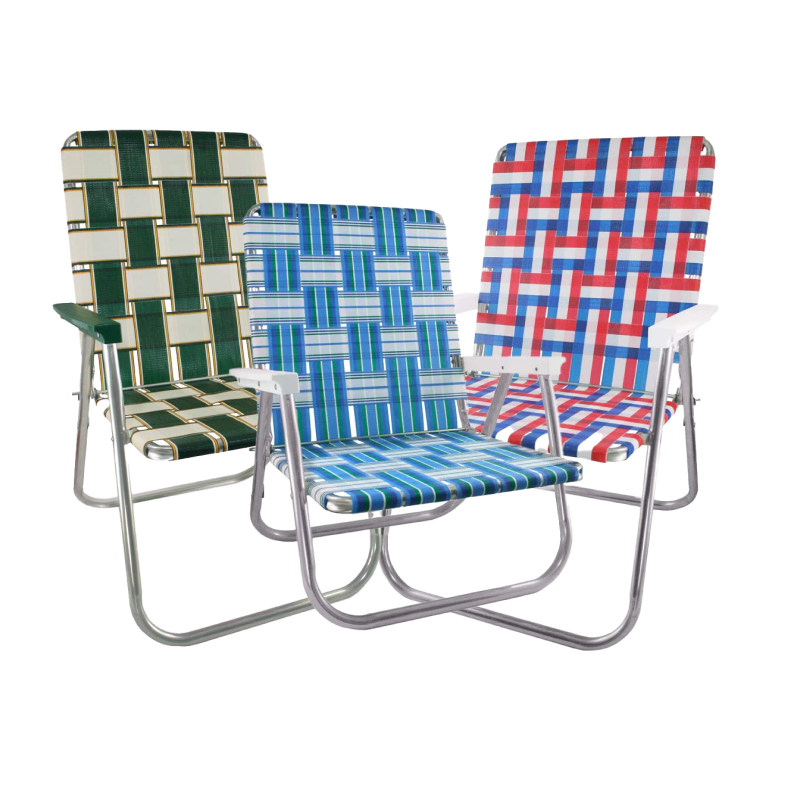
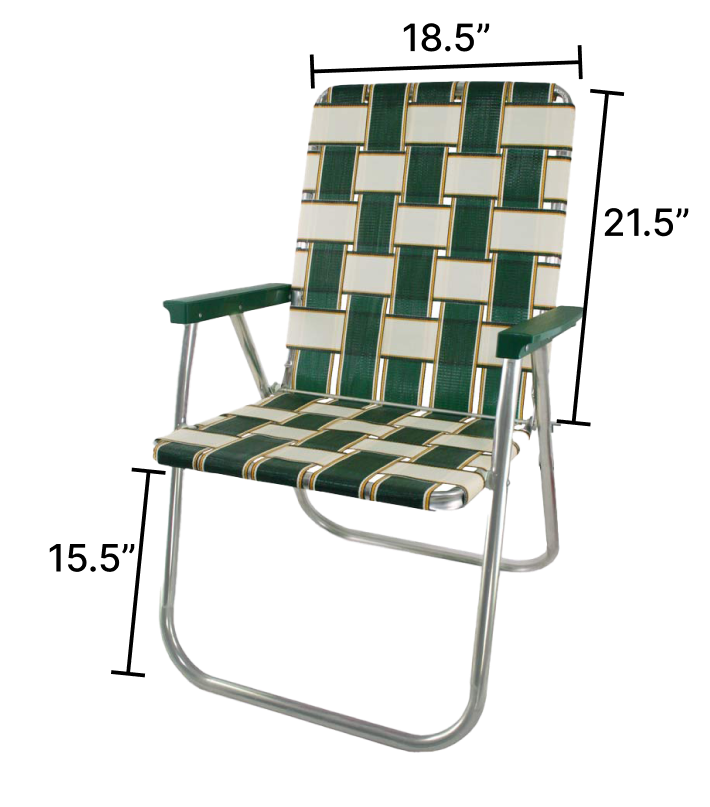
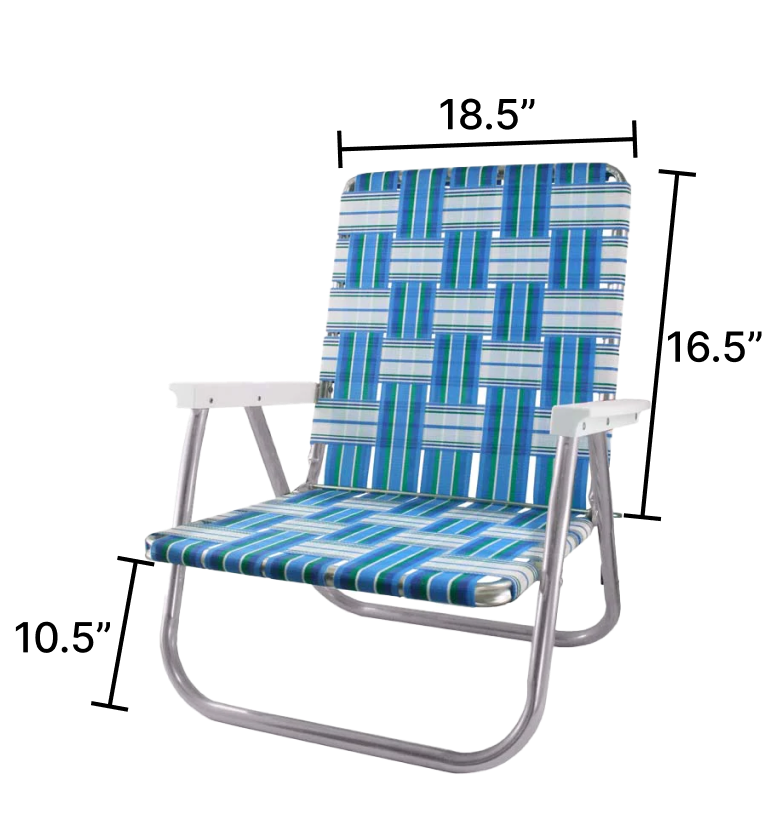
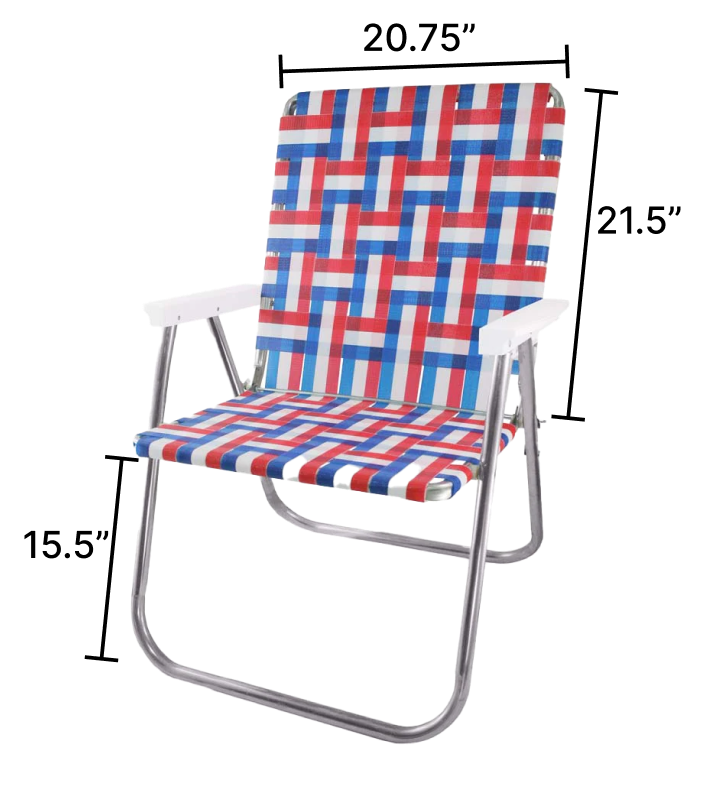

If you've got an aluminum folding chair with saggy, cracked, or missing straps, the good news is that the frame is almost certainly fine — these chairs are famously hard to kill. The webbing is the part that wears out, and it's the part that's easy to replace. The catch is that when you go to buy new webbing, you'll find a surprising number of choices. This guide walks through what actually matters when you're picking chair webbing, so you can order once and get back to sitting.
What Is Chair Webbing, Exactly?
Chair webbing is the flat, woven strapping that forms the seat and back of a classic folding lawn chair. The straps are woven over and under each other in a basket pattern, then anchored to the aluminum frame. That weave is what makes these chairs so comfortable: the straps flex and breathe in a way solid fabric slings and molded plastic never will.
Because the webbing does all the stretching and sun-soaking, it's the wear item. Frames last decades; webbing lasts years. If your chair sits low, feels loose, or has a strap that's gone brittle, you don't need a new chair — you need new webbing. You can browse every color we make in our lawn chair webbing collection.
Chair Webbing Material: What to Look For
Most modern chair webbing is made from woven polypropylene, and that's what you want for an outdoor chair. Here's why it beats the alternatives:
- It sheds water. Polypropylene doesn't absorb moisture, so it dries fast and won't rot or mildew the way cotton or jute strapping will.
- It handles sun. UV exposure is what kills webbing over time. Quality outdoor webbing is made to stand up to sunlight far better than bargain strapping, which can get brittle and crack after a season or two.
- It keeps its shape. Good webbing has a little give when you sit down, then springs back. Material that stretches and stays stretched is how chairs end up with that hammock sag.
If you're comparing options, check that the webbing is sold specifically for outdoor furniture. Strapping meant for indoor upholstery or general utility use often isn't built for years of sun and rain.
Webbing for Outdoor Chairs: Width and Fit
Webbing needs to match your chair, not just your taste. Before you order, take two quick measurements:
- Strap width. Measure the width of one of your existing straps. Replacement webbing should match it so the weave comes out with the same spacing and coverage the chair was built for.
- Strap length. Unhook or cut one strap free and measure it end to end, including the part that folds over to attach to the frame. Seat straps and back straps are usually different lengths, so measure one of each.
Our webbing is cut to work with our own aluminum frames, so if you're re-webbing a chair from our aluminum webbed lawn chair collection, the fit question is already answered.
How Much Webbing Do You Need?
Rather than guessing, count your way to the answer. Count the straps running side to side on the seat and back, then the straps running front to back. Multiply each count by the measured length of that type of strap, add the two totals, and then add a healthy margin — roughly ten percent — for the folds at each end and the occasional miscut. A little extra webbing is cheap insurance; running out with three straps to go is a special kind of frustrating.
If you're doing more than one chair, it's worth doing the math for the whole set at once. Matching webbing across four chairs on a porch looks sharp, and buying it together means no lot-to-lot color surprises.
Picking a Color or Pattern
This is the fun part, and there's no wrong answer — but a couple of things are worth knowing:
- Solids are forgiving. A single-color weave is simple to lay out, since every strap is interchangeable.
- Stripes and two-tone weaves have a pattern to follow. Take a photo of the original weave before you strip the old webbing, or find a photo of the chair you're matching, so you can reproduce the over-under sequence and color order.
- Think about what it's next to. Webbing is one of the cheapest ways to make an old chair match a new porch. Classic stripes read vintage; solids read modern.
Don't Forget the Fasteners
Webbing attaches to the frame one of two ways, and it pays to check which one your chair uses before you start:
- Clips hook the folded end of a strap to the frame without tools. If your chair uses them, grab a set of rewebbing clips so every strap gets a fresh, tight anchor.
- Screws pass through the folded end of the webbing into the frame. Old screws are often corroded or stripped, so a pack of re-web screws saves a trip to the hardware store mid-project.
Reusing forty-year-old fasteners on brand-new webbing is the one shortcut that tends to backfire — a fresh strap anchored by a rusty screw is only as strong as the screw.
Ready to Re-Web?
Once your webbing and fasteners arrive, the job itself is a pleasant afternoon project — no special tools, no upholstery skills. We've written a full walkthrough in How to Repair a Lawn Chair: Re-Web an Aluminum Chair Step by Step, covering the weave pattern, the folds, and the finishing touches.
A chair that's been in the family since the Carter administration deserves better than the curb. Pick your webbing, set aside an afternoon, and it'll be good for another generation of backyard barbecues.