


There's a moment every summer when you pull the folding chairs out of the garage and find that one of the old faithfuls has a sagging seat or a snapped strap. Most people toss the chair. That's almost always a mistake — if the aluminum frame is solid, lawn chair repair is a 30-to-45-minute job that costs a fraction of a new chair and keeps a perfectly good frame out of the landfill. This guide walks you through re-webbing an aluminum lawn chair from start to finish, whether you're fixing one broken strap or giving the whole chair a fresh look.
Repair or Replace? A 30-Second Check
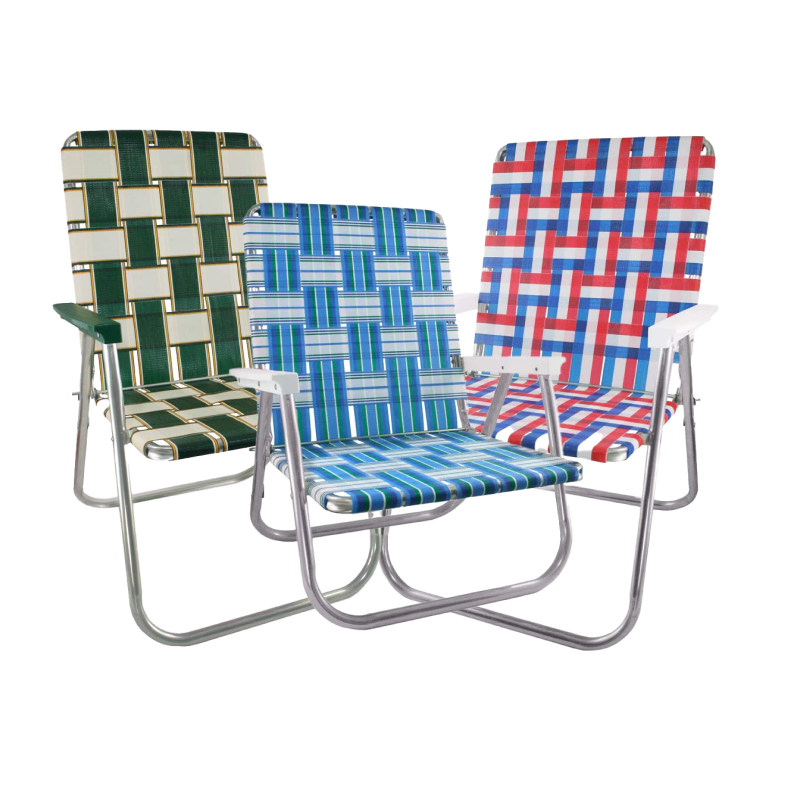
Before anything else, look at the frame. Grab the arms and flex the chair gently: the aluminum should feel rigid, the rivets tight, and the folding action smooth. Light oxidation polishes off; a bent or cracked frame does not. If the frame is straight and the joints are sound, the chair is worth repairing — vintage aluminum frames are often sturdier than what you'll find on a bargain-store chair today. If the frame is damaged, that's the time to look at a new aluminum webbed lawn chair instead.
What You'll Need: The Lawn Chair Repair Kit
A complete lawn chair repair kit comes down to three things:
- Replacement webbing. Outdoor-rated polypropylene webbing, usually 2¼ or 3 inches wide. A standard chair takes roughly one 72-foot roll; measure your chair before ordering (more on that below). Browse replacement lawn chair webbing in solid colors and classic stripes to match or completely restyle your chair.
- Fasteners. Either re-web screws with wide washer heads, or rewebbing clips that snap into the frame without tools. Screws give the most traditional look; clips make future strap swaps faster.
- Basic tools. Scissors, a screwdriver or small wrench, a lighter or match to heat-seal cut ends, and a tape measure.
Step 1: Count and Measure Before You Cut
Before removing anything, take a photo of the chair from the front and the side. The photo records the original weave pattern and how many straps run each direction — typically 6 to 7 horizontal straps on the seat back, and 5 to 6 verticals.
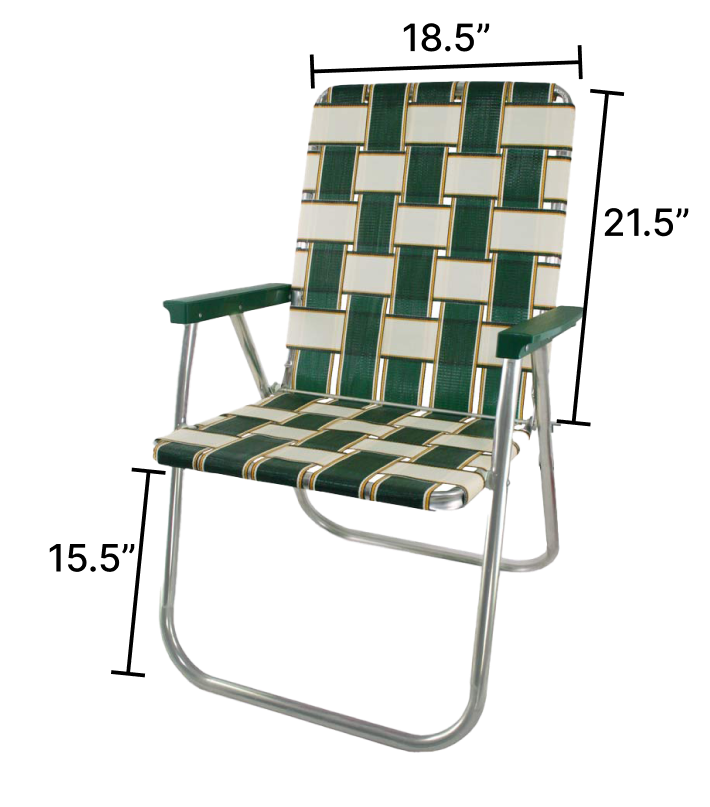
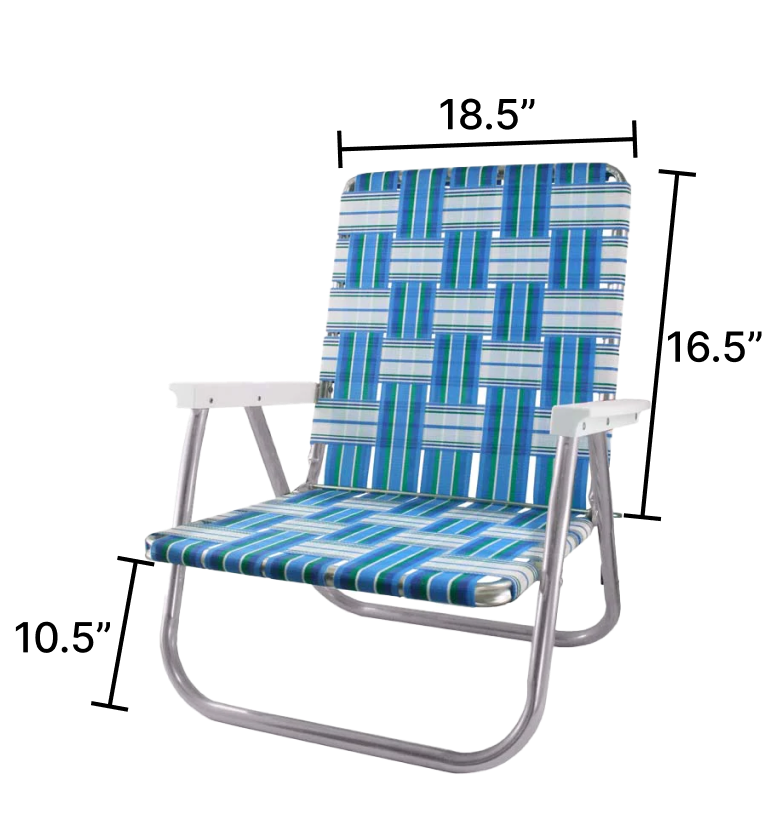
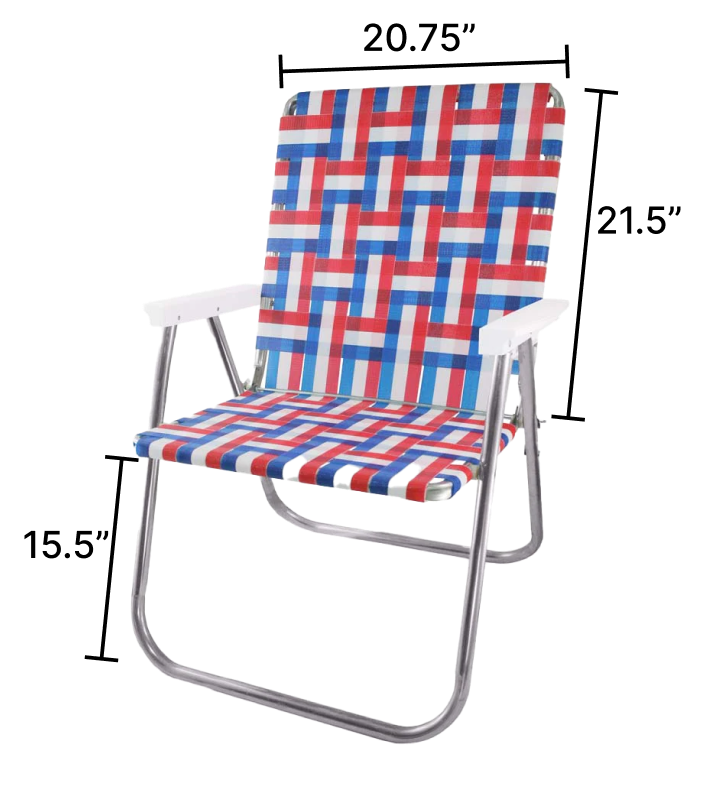
To measure a strap, run the tape across the frame where the strap will sit, then add about 3 inches on each end for folding and fastening. Horizontal and vertical straps are different lengths, so note them separately. Total up the lengths and you'll know whether one roll of webbing covers the job — for most standard chairs, it does with room to spare.
Step 2: Remove the Old Webbing
Unscrew or unclip each strap and back out the old fasteners. If a screw head is corroded, a drop of penetrating oil and a few minutes of patience beat forcing it. This is also the moment to clean the frame: warm soapy water, a rinse, and a full dry. A clean, dry frame makes the new webbing sit better and last longer.
Step 3: Cut the New Straps
Cut each strap to your measured length. If using screws fold into a triangle, if using clips put the clip through and fold in half.
Step 4: Weave and Fasten
Install all the straps in one direction first — most people start with the horizontals, working top to bottom, keeping each strap snug but not drum-tight. Then weave the vertical straps through: over the first horizontal, under the second, over the third, alternating as you go, and offset the pattern on each neighboring vertical so it forms the classic checkerboard. Pull each vertical firm before fastening the bottom end. Snug is right; overtightened webbing stresses the fastener holes and makes the chair feel like a board.
Fasten each end into the frame's existing holes with your screws or clips, folded side facing the frame so the fastener bites through the triple layer.
Step 5: The Sit Test
Open the chair on level ground and sit down slowly. New webbing stretches slightly in the first few uses and then settles. If one strap sags noticeably after a week, re-tension that strap alone — one of the joys of a webbed chair is that every strap is individually replaceable.
Keeping Your Chair Going for Another Decade
Store chairs out of direct sun when you're not using them — UV exposure, not sitting, is what ages webbing fastest. Hose off sunscreen and salt spray after beach trips, and let chairs dry open before folding them up. Do that, and a re-webbed aluminum chair will outlast most brand-new big-box chairs.
Ready to bring one back to life? Pick your colors from our webbing collection, add re-web screws or clips, and you've got everything a lawn chair repair needs in one box. And if your old frame has finally earned its retirement, our classic aluminum lawn chairs are made to be re-webbed again and again — that's the point.