


Every summer we hear the same story: someone buys a folding chair at a big-box store in May, and by August the seat fabric has torn at the seam or a leg has folded sideways under normal use. If you've been searching for heavy-duty lawn chairs, you already know the frustration. The good news is that "heavy duty" isn't a mystery — it comes down to four things you can check before you buy: the frame material, the seat surface, the published weight limit, and whether the chair can be repaired when something finally wears out.
What Actually Makes a Lawn Chair Heavy Duty
Most chairs fail in one of two places, and neither is the part people inspect in the store.
- The frame. Thin rolled steel rusts from the inside out, and hollow plastic-jointed frames flex a little more every season until they don't come back. An aluminum tube frame doesn't rust at all, which matters enormously if your chairs live outside or ride to the beach.
- The seat surface. A one-piece sling of polyester fabric is a single point of failure — when it tears, the chair is done. Woven webbing spreads your weight across many independent straps, so no single strap carries the whole load.
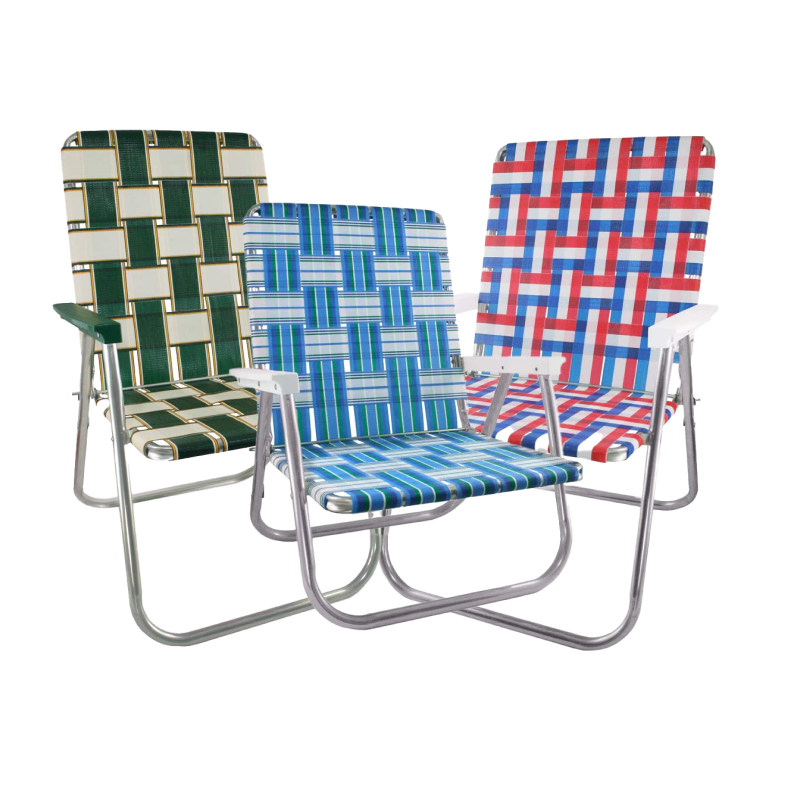
That second point is the real reason webbed aluminum lawn chairs outlast fabric folding chairs by years. Load is distributed, and any strap that does wear out can be swapped in a few minutes instead of condemning the whole chair.
Lawn Chair Weight Limits, Explained
A published weight limit is a rating for comfortable, everyday use over the long haul — not the point where a chair collapses. It accounts for repeated loading, seasons of sun exposure, and the reality that people don't lower themselves into a chair gently. Treat it as the number the chair is designed to live at, not a ceiling to test.
Two rules of thumb are worth knowing. First, sitting down hard puts noticeably more force on a frame than sitting down slowly, so it's smart to leave headroom between your weight and the rating. Second, a rating assumes the chair is open on level ground with all four feet planted. Soft sand, soggy turf, and uneven patio pavers concentrate load onto one leg and are a far more common cause of bent frames than a heavy person is.
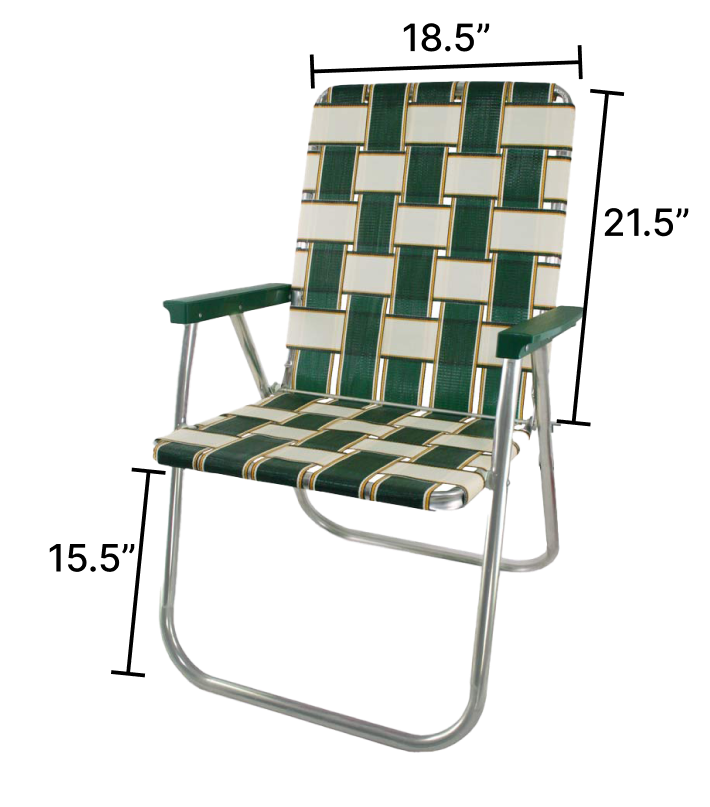
For reference, our Charleston Classic lawn chair carries a recommended weight capacity of 225 lbs with an 18.5-inch seat width, which suits most adults comfortably.
Classic vs. Magnum: Picking the Right Size
If you want more room or more capacity, size up rather than hunting for a mystery "heavy duty" label. Our Magnum chairs are the oversized version of the same design, built with the big and tall in mind:
- Classic: 18.5-inch seat width, 225 lb recommended capacity, 4.2 lbs total weight.
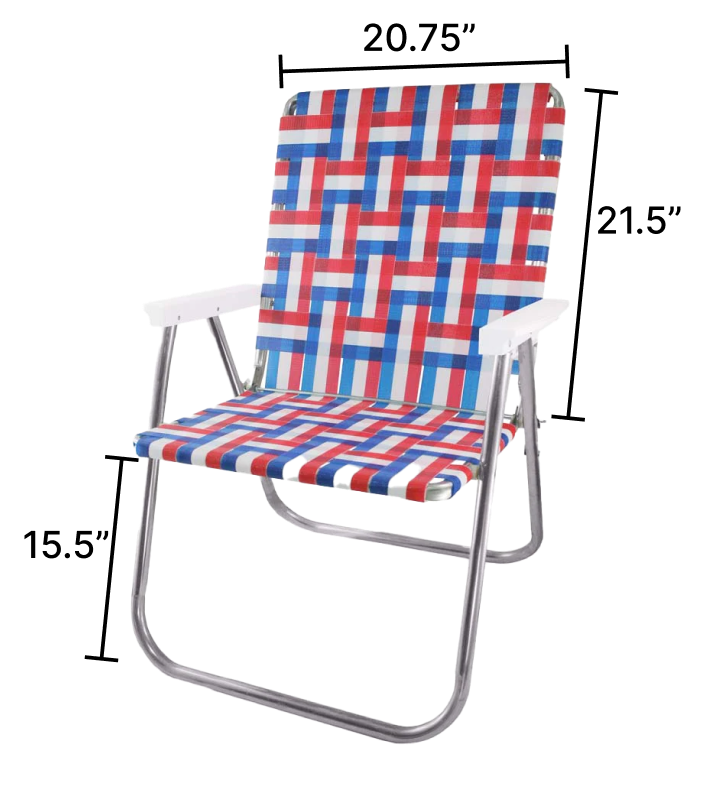
- Magnum: 20.75-inch seat width, 275 lb recommended capacity, 4.5 lbs total weight.
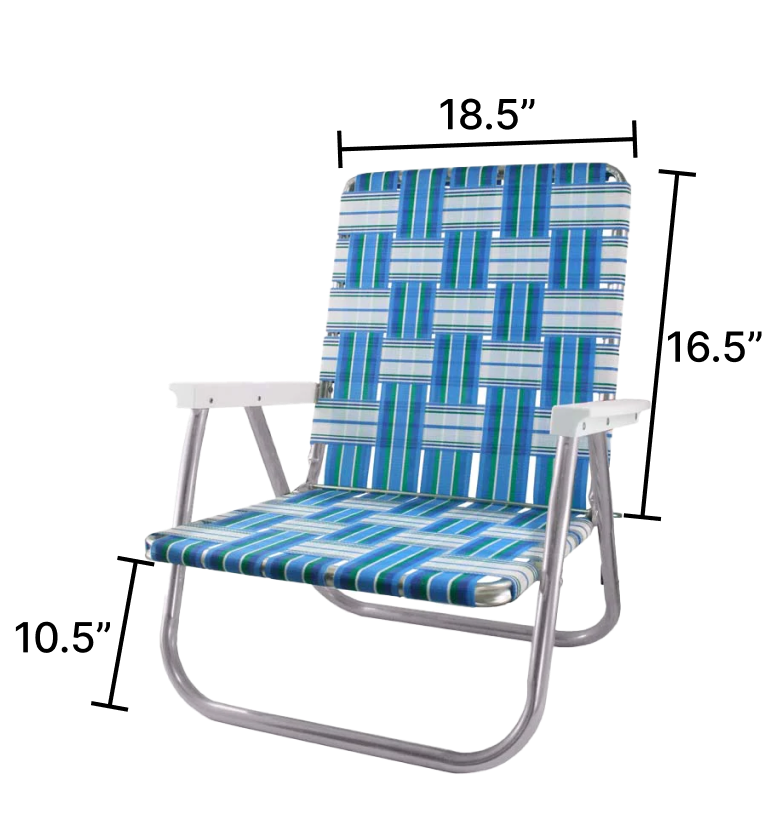
That extra 2.25 inches of seat width makes a bigger comfort difference than the number suggests — it's the difference between your hips touching the arms and not. Both sizes share the same back height, seat height, and fold-flat dimensions, so a mixed set still looks like a matched set around the fire pit. The Charleston Magnum is the easiest place to see the difference side by side.
Sturdy Doesn't Have to Mean Heavy
Here's the counterintuitive part of shopping for sturdy lawn chairs: the heaviest chair on the shelf is often the weakest. Weight in a folding chair usually means steel, and steel in a chair that lives outdoors means rust at every joint and rivet within a couple of seasons. Aluminum gives you rigidity without the corrosion, which is why a chair that weighs four and a half pounds can hold more than a steel chair twice its mass and still be carried one-handed from the car to the campsite.
Lightweight also changes how often a chair actually gets used. A 15-pound chair stays in the garage. A 4-pound chair that folds flat to 32 inches ends up at the parade, the soccer game, and the tailgate — which is the whole point of owning one.
The Test That Actually Predicts Durability
Before you buy any folding lawn chair, ask one question: can I get replacement parts for it?
It's the single best predictor of how long a chair will last, and almost nobody asks it. A chair with a sewn-in fabric sling and riveted plastic joints has a fixed lifespan built into it — when the sling goes, the chair goes. A webbed chair is modular by design. Straps stretch and fade eventually, and when they do you re-web the chair with fresh replacement lawn chair webbing and it's structurally new again. The same aluminum frame can be re-webbed over and over, which is why these chairs get handed down rather than thrown out.
Making a Heavy-Duty Chair Last Even Longer
A few habits do most of the work:
- Store out of direct sun. UV degrades webbing faster than sitting on it ever will. A shed, a garage, or a chair cover buys you years.
- Rinse after the beach. Salt and sunscreen are hard on webbing and hardware. A quick hose-off and an open-position dry is enough.
- Open and close deliberately. Most bent frames come from a chair being forced shut with a strap or an arm caught in the hinge.
- Check the fasteners each spring. Snug up anything that's backed out. Thirty seconds per chair prevents the wobble that eventually elongates a hole.
- Set up on level ground. Especially on sand — dig a shallow flat spot rather than letting the chair rock on two legs.
Where to Start
If you're an average-framed adult, the classic aluminum webbed chair is the right call at 225 lbs of rated capacity. If you want a wider seat, more capacity, or you simply prefer not to sit near a limit, go straight to the Magnum size. Either way you're getting a rust-free aluminum frame, fade-resistant webbing, and a chair made in the USA that you can rebuild instead of replace.
That last part is what "heavy duty" should have meant all along — not a chair that survives one summer, but a chair you'll still be sitting in twenty summers from now.